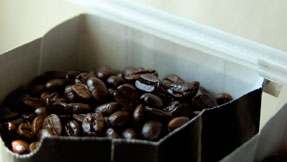
The roast
The roast process
The careful roasting of the green bean is what gives coffee its place in our daily lives. Here’s how we do it.
A clean roast, all the way through
Roasting is not a mystery. The careful application of heat breaks down the proteins in the bean to create aromatic oils, called caffeol, which combine with the gasses in the bean to make the heart and soul of every good cup.
We roast in a fluid-bed roaster, which keeps the beans aloft in a circulating fountain of air and roasts them evenly, right through to the center. Other methods press the beans against hot metal, burning the outside while the inside stays raw and the taste turns grassy or bitter.
Because the beans never touch hot metal, they don’t pick up anything from previous roasts. Each bean is roasted in a wave of clean air. A thermocouple reads the temperature to within a hundredth of a degree, but it still takes a roastmaster with an ear for the crackle, a nose for the roast and an eye for color.
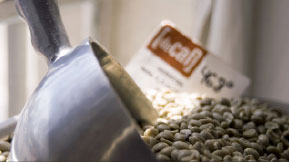
Each bean to its best
Different beans differ in moisture and density, so they roast at different rates. It’s up to the roastmaster to test, taste and bring each variety to its own best temperature and color, drawing out the flavors that live in the oils and gasses after roasting.
Lighter roasts hold more caffeine, acids and oils, with a subtle, pleasant brightness. Darker roasts lose their oils faster but carry a sweeter flavor and less acidity. Whether you prefer a single origin or a blend, we roast to each bean’s best qualities.
Keep it fresh, keep it frozen
Once roasted, the elements that give coffee its flavor begin to break down. Within 72 hours much of the gas, where most of the flavor lives, has dissipated, and the delicate oils start to release. We believe each bean’s flavor should be celebrated and enjoyed as-is, not left to go flat.
To prevent off-gassing and oil loss, we freeze our beans right after roasting, sell them frozen, and suggest you freeze them at home in an airtight container too. Take out just the beans you need, let them come to room temperature, then grind and brew. Those two minutes in the morning, and the aroma of freshly ground beans, are part of the experience. Enjoy.